
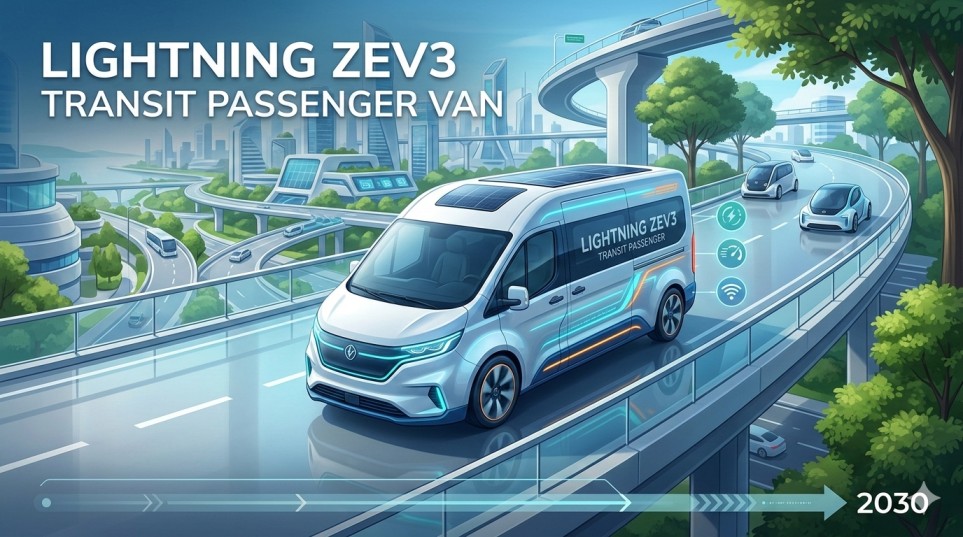
Lightning ZEV3 Transit Passenger Van Cost – 2026 Guide
The transportation industry is rapidly embracing electric vehicles (EVs), and for commercial fleets, the shift is more than just a trend it’s a cost-effective and environmentally responsible decision. Among the standout options is the Lightning ZEV3 Transit Passenger Van, a Class 3 battery electric vehicle designed for passenger transport. From fleet managers to municipal transport operators, understanding the Lightning ZEV3 Transit Passenger Van Cost is crucial for making informed decisions.
What Is the Lightning ZEV3 Transit Passenger Van?
The Lightning ZEV3 Transit Passenger Van is a fully electric, zero-emission passenger van designed to replace traditional diesel and gas-powered vans in commercial fleets. Built for versatility, it is suitable for applications such as shuttle services, healthcare transport, and municipal fleets. Its compact yet robust design ensures accessibility and efficiency for urban and suburban routes alike.
Unlike conventional vans, the ZEV3 operates silently and produces zero tailpipe emissions, helping businesses meet sustainability goals. Its Class 3 EV designation means it can handle heavier payloads while maintaining efficiency, making it an ideal option for organizations needing a reliable, eco-friendly passenger transport solution.
Real-world examples highlight its utility: several airports in the U.S. are replacing diesel shuttle vans with ZEV3 models to reduce fuel costs and meet emissions regulations, while assisted living facilities are adopting the ZEV3 for safe, comfortable patient transport.
ZEV3 Specs That Affect Cost
When considering the Lightning ZEV3 Transit Passenger Van Cost, specifications play a critical role. The vehicle comes with two battery options: an 80 kWh pack offering a 140-mile range and a 120 kWh pack extending the range to 200 miles. Charging is flexible, with Level 2 AC for standard overnight charging and DC Fast Charge for quick turnaround during fleet operations.
Performance metrics are equally impressive. The ZEV3 delivers 215 HP and 733 lb-ft of torque, with GVWR ranging between 10,360 and 11,000 lbs, making it a solid choice for commercial passenger transport. Its efficiency ranges from 66 MPGe to 72 MPGe depending on battery configuration and route conditions.
| Specification | 80 kWh Battery | 120 kWh Battery |
|---|---|---|
| Range (miles) | 140 | 200 |
| Charging (Level 2 / DC Fast) | 5 hrs / 1 hr | 8.5 hrs / 2 hrs |
| GVWR (lbs) | 10,360 | 11,000 |
| HP / Torque | 215 / 733 | 215 / 733 |
| Efficiency (MPGe) | 72 | 66 |
These specs directly influence cost—larger batteries and faster charging setups naturally increase upfront investment, but they can also reduce operational downtime and improve long-term ROI for fleets.
Why Choose an Electric Passenger Van?
Electric vans offer a unique set of benefits that extend beyond simple fuel savings. For fleet operators, maintenance costs are significantly lower compared to diesel or gas vans. Electric motors have fewer moving parts, reducing wear and tear, and lowering the need for frequent repairs. On average, a ZEV3 can save thousands in maintenance over a 15-year fleet lifecycle.
Federal and state incentives further reduce the effective Lightning ZEV3 Transit Passenger Van Cost. With programs like the Buy America certification and the FTA Low- or No-Emission grants, fleets can access funding that offsets both purchase price and charging infrastructure investment.
Beyond cost, EVs offer environmental and social benefits. Reduced emissions contribute to cleaner urban air, quieter operation improves passenger comfort, and zero tailpipe emissions position organizations as sustainability leaders. For example, healthcare providers have reported that switching to electric vans for patient transport has noticeably reduced noise and improved ride comfort, particularly for elderly or mobility-impaired passengers.
Lightning ZEV3 Transit Passenger Van Cost Breakdown
Understanding the Lightning ZEV3 Transit Passenger Van Cost involves more than the base price. Here’s a realistic breakdown for fleet planning:
-
Base price: $44,000–$46,990 depending on model and configuration
-
Charging infrastructure: $2,000 for hardware plus $3,500 for installation
-
Operating cost: electricity costs around $214 per year compared to $9,631 for diesel maintenance
-
Long-term ownership: 15-year TCO shows significant savings, particularly for fleets operating in urban routes
| Cost Element | Diesel Van | ZEV3 Electric Van |
|---|---|---|
| Purchase Price | $44,000 | $46,990 |
| Annual Fuel / Electricity | $9,631 | $214 |
| Maintenance Costs | $3,991 | $3,991 |
| Charging Installation | N/A | $3,500 |
| Total 15-Year Cost | High | Lower |
These figures highlight how battery-electric commercial vans like the ZEV3 can reduce total cost of ownership despite slightly higher upfront costs. Factors like route distance, frequency of use, and charging access can shift the balance, but fleet operators often find the ROI favorable.
ZEV3 vs Other Electric & Diesel Passenger Vans
Comparison is key when evaluating fleet investments. Unlike conventional diesel vans, the ZEV3 offers lower maintenance and fuel costs, higher operational efficiency, and eligibility for government incentives. When compared with other electric Class 3 vans, the ZEV3 stands out for its balance of payload capacity, range, and upfront cost.
In practical terms, a shuttle service replacing five diesel vans with ZEV3 units found that total fuel and maintenance costs dropped by over 60% annually. Similarly, assisted living facilities reported improved passenger comfort and reduced noise pollution without sacrificing payload or seating capacity.
How to Electrify Your Fleet with ZEV3
Transitioning to electric vans requires planning. Fleet managers must consider charging infrastructure, route planning, incentives, and long-term savings. Grants and rebates can significantly reduce upfront costs, making electric passenger vans accessible even for smaller operators. Leasing versus buying is another strategic consideration: leasing can reduce initial capital outlay while offering flexibility for fleet upgrades as technology evolves.
Route analysis is particularly important. ZEV3 vans with a 140–200 mile range can comfortably handle daily shuttle and healthcare transport routes without frequent recharging, but longer interstate routes may require strategic DC Fast Charging stops. Integrating fleet telematics helps monitor battery usage, predict maintenance, and maximize vehicle uptime.
Best Uses for the Lightning ZEV3 Passenger Van
The ZEV3 excels in specialized fleet applications. Shuttle services at airports or corporate campuses benefit from its quiet operation and zero emissions. Healthcare providers use the ZEV3 for patient transport, appreciating the smooth ride and low noise. Municipal fleets find it suitable for both passenger transport and administrative tasks, while its customizable configurations allow adaptation for wheelchair accessibility or cargo transport.
These real-world examples illustrate the van’s versatility, reinforcing its value for operators who need commercial electric vans capable of diverse missions.
Is the Lightning ZEV3 Worth the Price?
Deciding whether the ZEV3 is a worthwhile investment depends on operational needs and cost considerations. For small to medium fleets operating mostly urban routes, total cost of ownership is typically lower than diesel alternatives. Depreciation is offset by fuel savings and incentives. Additionally, electric vans help organizations meet environmental compliance goals and improve public perception.
Some potential drawbacks include higher upfront costs and the need for charging infrastructure. However, when factoring in EV incentives, tax credits, and long-term operational savings, the ZEV3 often emerges as the more cost-effective solution over its lifecycle.
Hidden Costs & Savings of Electric Vans
Fleet managers should consider hidden costs like battery replacement, insurance premiums, and software/telemetry system subscriptions. Conversely, hidden savings include reduced downtime, lower brake and engine wear, and tax advantages. Over a 10–15 year period, these hidden savings can significantly improve ROI, making electric vans like the ZEV3 attractive for long-term fleet planning.
Future-Proofing Your EV Fleet
Investing in a ZEV3 today prepares fleets for tomorrow. The van’s battery technology is compatible with evolving charging standards, ensuring long-term viability. Regular software updates and telematics integration allow managers to optimize routes, track battery health, and schedule predictive maintenance, safeguarding both performance and resale value. With government incentives supporting zero-emission fleets, the ZEV3 offers both financial and operational sustainability. For insights into iconic automotive design and branding that influence EV perception, check out the 1936 BMW Logo Design and how classic innovation shapes modern vehicles.
Conclusion
The Lightning ZEV3 Transit Passenger Van Cost may initially appear higher than traditional diesel vans, but when considering total cost of ownership, fleet incentives, environmental benefits, and operational efficiency, the ZEV3 stands out as a compelling option. Its robust specs, flexibility for specialized fleets, and long-term savings make it a strong contender for businesses seeking to modernize their passenger transport operations.
Whether you’re a healthcare provider, shuttle operator, or municipal fleet manager, the Lightning ZEV3 Transit Passenger Van represents a strategic investment that balances cost, performance, and sustainability for years to come.