
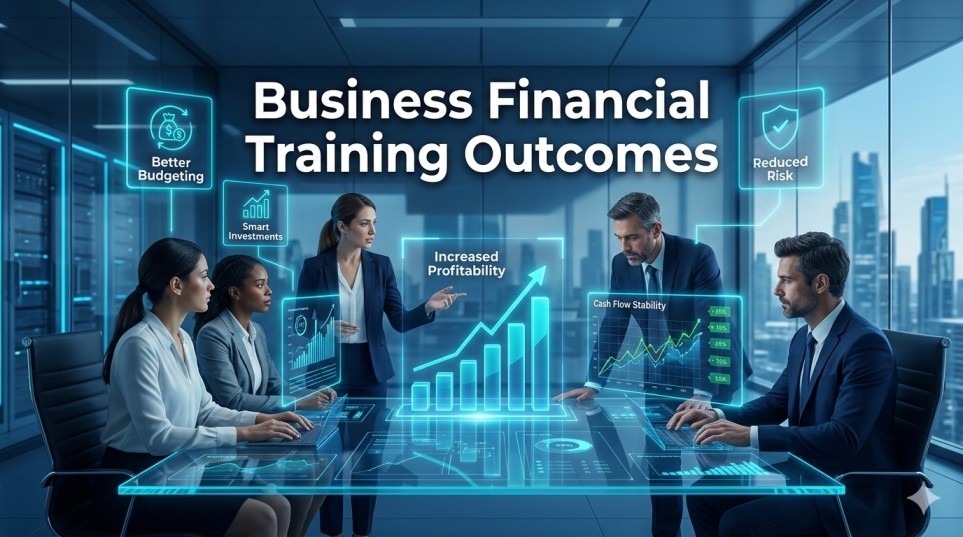
Business Financial Training Outcomes: Measurable Results Guide
In today’s competitive and fast-changing economy, understanding money is no longer optional for business owners, managers, and leaders. The concept of Business Financial Training Outcomes goes beyond simply attending a course or earning a certificate. It focuses on the real, measurable changes that happen after learning financial skills — such as improved decision-making, better budgeting, stronger cash flow control, and smarter investments.
Many organizations invest in financial training for business leaders, but only a few track what truly matters: outcomes. These outcomes include increased profitability, reduced financial risk, higher confidence in financial planning, and stronger long-term growth. Whether you are a startup founder, SME owner, corporate executive, or aspiring entrepreneur, understanding how financial training translates into business results is critical for sustainable success.
Modern corporate finance training programs now emphasize practical learning. Instead of abstract theory, they focus on financial statement analysis, working capital management, investment and financing decisions, and capital budgeting techniques. The goal is simple: turn financial knowledge into business performance.
What Competitors Focus On in Business Finance Learning Outcomes
Most competitors and financial training platforms focus on traditional business finance learning outcomes. These topics are foundational and important, but often taught without linking them clearly to measurable business results.
Common learning outcomes include:
-
Understanding profit and loss statements
-
Interpreting balance sheets
-
Managing cash flow and liquidity
-
Working capital management
-
Capital budgeting and investment appraisal
-
Cost of capital basics
-
Risk analysis and financial forecasting
These areas fall under corporate finance training and financial analysis for business. Learners gain technical knowledge, but without applying it to real-world scenarios, the business impact remains limited.
Core Learning Areas Explained
| Learning Area | What You Learn | Business Impact |
|---|---|---|
| Financial Statements | Read P&L, balance sheet, cash flow | Better financial visibility |
| Budgeting & Forecasting | Plan future income and expenses | Smarter resource allocation |
| Working Capital | Manage receivables & payables | Improved liquidity |
| Investment Decisions | Evaluate ROI & risk | Higher return on capital |
| Risk Management | Identify financial threats | Reduced losses |
These skills form the base of business finance learning outcomes, but outcomes alone don’t guarantee results unless leaders apply them in real business decisions.
Strategic Benefits of Financial Training for Business Leaders
One of the biggest benefits of financial training is improved leadership decision-making. Leaders who understand finance don’t rely purely on instinct; they rely on data. This shift directly improves business outcomes.
Key strategic benefits include:
-
Stronger budgeting and forecasting skills
-
Smarter resource allocation
-
Better control over operating costs
-
More confident investment decisions
-
Improved communication with investors and stakeholders
When leaders develop strategic financial planning abilities, they can align budgets with business goals, forecast market changes, and protect the company during downturns. This is where benefits of financial training become visible in daily operations.
Well-trained leaders also manage risk more effectively. By understanding liquidity ratios, cash flow cycles, and profit margins, they avoid common financial mistakes such as over-expansion, underpricing, or poor debt management.
Measurable Business Financial Training Outcomes
Here’s where most competitors fall short: measurement. Training without measurement is guesswork. Real Business Financial Training Outcomes are reflected in performance metrics and financial KPIs.
Key Metrics to Track
-
Revenue growth percentage
-
Profit margin improvement
-
Cost reduction rate
-
Cash flow stability
-
Budget accuracy
-
ROI from training investment
Example Outcome Table
| Metric | Before Training | After Training | Outcome |
|---|---|---|---|
| Profit Margin | 12% | 18% | +6% improvement |
| Cash Flow Gaps | Frequent | Rare | Improved liquidity |
| Budget Accuracy | 65% | 90% | Better forecasting |
| Decision Time | Slow | Faster | Agile leadership |
These financial performance indicators clearly show how training translates into results. When companies measure outcomes, they can justify the ROI of financial training programs and refine their learning strategies.
Corporate Finance Training Outcomes for Executives & Managers
Executives and managers benefit the most from advanced corporate finance training outcomes because their decisions impact the entire organization.
Key outcomes include:
-
Capital structure optimization
-
Smarter investment and financing decisions
-
Improved liquidity management
-
Better risk-adjusted return analysis
-
More strategic funding choices
When leadership teams master capital budgeting techniques, they invest in projects with higher returns and lower risk. This leads to stronger long-term financial stability.
Executives also gain the confidence to communicate financial performance clearly to boards, investors, and partners. This strengthens trust and transparency, two pillars of sustainable growth.
Financial Training Outcomes for Small Businesses & Entrepreneurs
Small businesses and entrepreneurs often lack structured financial education. For them, Business Financial Training Outcomes can be transformational.
Key outcomes include:
-
Better pricing strategies
-
Improved cash flow forecasting
-
Reduced debt dependency
-
More disciplined budgeting
-
Higher business survival rates
Small business owners who learn budgeting and forecasting skills are better equipped to handle market volatility. They can plan for slow seasons, manage supplier payments, and avoid cash crunches.
Financial training courses for small business owners also improve confidence. Instead of fearing financial reports, entrepreneurs learn to use financial data as a decision-making tool.
How Financial Training Improves Decision-Making
One of the strongest long-tail benefits is how financial training improves decision-making for business leaders. Decisions become:
-
Data-driven
-
Risk-aware
-
Strategically aligned
-
Long-term focused
Instead of relying on assumptions, leaders use financial analysis for business to compare scenarios, forecast outcomes, and evaluate risks. This reduces emotional decisions and increases consistency.
Training also teaches scenario planning. Leaders learn how different variables — pricing changes, cost increases, or market downturns — affect profitability. This prepares businesses to respond quickly to change.
Skills Gained from Business Financial Training
Effective training builds a practical financial skill set:
-
Financial statement interpretation
-
Budgeting & forecasting
-
Risk management
-
Capital allocation
-
Performance tracking
-
Investor reporting
These skills support better leadership and stronger operational control. Over time, businesses that develop financial literacy for business growth outperform competitors who rely on intuition alone.
Short-Term vs Long-Term Business Financial Training Outcomes
Understanding the difference between short-term and long-term results helps organizations set realistic expectations from financial training programs. Both matter, but they show up in different ways and timelines.
Short-Term Outcomes
These appear within weeks or a few months of training:
-
Improved financial awareness
-
Better budgeting discipline
-
Clearer understanding of profit and loss
-
More accurate short-term forecasts
-
Reduced operational financial errors
Short-term outcomes are often linked to budgeting and forecasting skills and improved financial reporting accuracy. Leaders start asking better questions and using financial data in daily decisions.
Long-Term Outcomes
Long-term Business Financial Training Outcomes are strategic and compounding:
-
Sustainable revenue growth
-
Higher profitability over time
-
Stronger cash flow stability
-
Smarter investment strategies
-
More resilient financial leadership
Over time, trained leaders build financial frameworks that guide decisions for years, not just months. This leads to consistent business performance and reduced financial risk.
How to Measure Business Financial Training Outcomes Effectively
Measuring outcomes is what turns training from a cost into an investment. Without tracking results, organizations can’t prove ROI or improve their learning strategy.
KPIs to Track After Training
-
Revenue growth rate
-
Profit margin improvement
-
Cash flow consistency
-
Budget forecast accuracy
-
Return on training investment (ROI)
-
Reduction in financial errors
Simple Measurement Framework
| Area | KPI | Tool |
|---|---|---|
| Revenue | Growth % | Monthly reports |
| Profitability | Net margin | P&L statements |
| Cash Flow | Liquidity ratio | Cash flow statements |
| Budgeting | Forecast accuracy | Budget vs actual |
| ROI | Training cost vs gains | ROI model |
Tracking these financial performance indicators helps leaders understand whether training is producing real business value. Measurement also improves accountability across departments.
Common Mistakes That Reduce Training Impact
Even high-quality programs fail when implemented poorly. Avoiding these mistakes ensures better Business Financial Training Outcomes.
Common pitfalls include:
-
No real-world application after training
-
Lack of follow-up coaching
-
No KPI tracking or measurement
-
Generic programs not aligned with industry needs
-
Treating training as a one-time event
To maximize outcomes, organizations should integrate financial training into daily workflows and leadership development programs.
How to Choose the Right Financial Training Program
Not all programs deliver the same outcomes. Choosing the right one is critical for strong results.
What to Look For
-
Practical, case-based learning
-
Industry-relevant content
-
Focus on measurable outcomes, not just certificates
-
Mentorship or coaching support
-
ROI-driven learning goals
Programs that focus on financial analysis for business and real-world application produce stronger long-term results than purely theoretical courses.
Real-World Examples of Business Financial Training Outcomes
Case 1: SME Cash Flow Turnaround
A small retail business struggled with cash flow gaps. After training in working capital management, the owner improved receivables collection and supplier payment scheduling. Result: cash flow stabilized within three months.
Case 2: Executive Investment Decisions
A mid-size company trained its leadership team in capital budgeting techniques. The team rejected low-ROI projects and invested in higher-return initiatives, improving profitability by 7% in one year.
Case 3: Startup Budgeting Discipline
A startup founder learned budgeting and forecasting skills. By tracking expenses and revenue forecasts monthly, the startup extended its runway by six months and attracted new investors.
These examples show how Business Financial Training Outcomes directly improve financial performance and business sustainability.
Future Trends in Business Financial Training
Financial education is evolving fast. Future trends include:
-
AI-driven financial analytics
-
Online finance training platforms
-
Data-driven finance education
-
Microlearning for executives
-
Scenario-based financial simulations
As technology improves, training will become more personalized and performance-focused, strengthening financial literacy for business growth across organizations.
Final Thoughts: Are Business Financial Training Outcomes Worth It?
Absolutely. When done right, Business Financial Training Outcomes deliver measurable ROI, stronger leadership, and sustainable growth. The key is moving beyond certificates to real-world application, KPI tracking, and continuous learning. For more guides, courses, and expert insights on business finance and leadership development, visit SolutionVibe360.
Key Takeaways
-
Financial training improves decision-making and performance
-
Measurement turns training into an investment
-
Outcomes compound over time
-
Practical application matters more than theory
-
Long-term financial literacy drives competitive advantage
If your goal is to improve profitability, reduce risk, and build financially confident leaders, investing in outcome-driven financial training is one of the smartest moves you can make.